


Ill fares the land, to hastening ills a prey,
Where wealth accumulates, and men decay.
— Oliver Goldsmith, The Deserted Village (1770)

I. The Age of Persons
Take a village weaver. She was paid for her shawls, in grain or in coin, and she bargained like everyone else. But nobody came to her for the price. They came because her cloth had kept their mother warm for three winters, and because the other weaver had once delivered a wedding shawl a week after the wedding. The price got settled afterwards, loudly, and everyone knew how it would end.
Everyone was known like that. One man mended nets. Another couldn’t be left alone with the goats. A woman’s bread never rose, and the whole village had opinions about it. People were known by what they did and how well they did it, and it followed them to the grave. Often it was unfair. But it was about them, and no one else.
It sounds lovely, and it was, if your story was a good one. If it wasn’t, too bad. The village knew your father’s story too, and your grandfather’s, and it had no plans to let you write a new one.
II. The Age of Coin
The village was small, and the world beyond it was full of strangers. Once people began trading with towns they’d never seen, they had a problem. How do you trust a man you’ll meet once at a market and never again?
Money solved it. The stranger didn’t need to trust you, only your coin. The merchant didn’t care who you were. He cared whether the coin was real.
And a coin that doesn’t ask who you are doesn’t ask whose son you are either. Caste, accent, family name: all of it stayed outside the shop. A boy born into the wrong story could walk to the next town with a few coins in his pocket and be served like anyone else. For a great many people, that was the first taste of freedom they ever had.
For a long while, money stayed in its place. Being rich was like being tall. It helped, people noticed, and nobody thought it was his sole identity measure. But that changed- the capitalised society evened out the differences of human and highlighted the differences of numbers in time to come.
III. The Age of Mass Production
The weaver’s granddaughter works in a garment factory. She sews sleeves. Only sleeves, a few hundred a day, onto shirts she will never see finished, for people she will never meet. The shirts cost less than her grandmother’s shawls ever did, and there are millions of them.
Nobody knows her for her sleeves. Nobody could. Her seams look exactly like the seams of the girl beside her, and that’s the whole idea. If she falls ill tomorrow, someone else will be on her stool by noon, and not one shirt will notice.
That’s what a number is: something you can swap for another of the same size. Nobody cares which hundred-rupee note they’re handed. One is as good as another. At the gate she has an ID number, at the end of the month a wage, and in between, a count of sleeves. Her name hasn’t gone anywhere. It just isn’t needed.
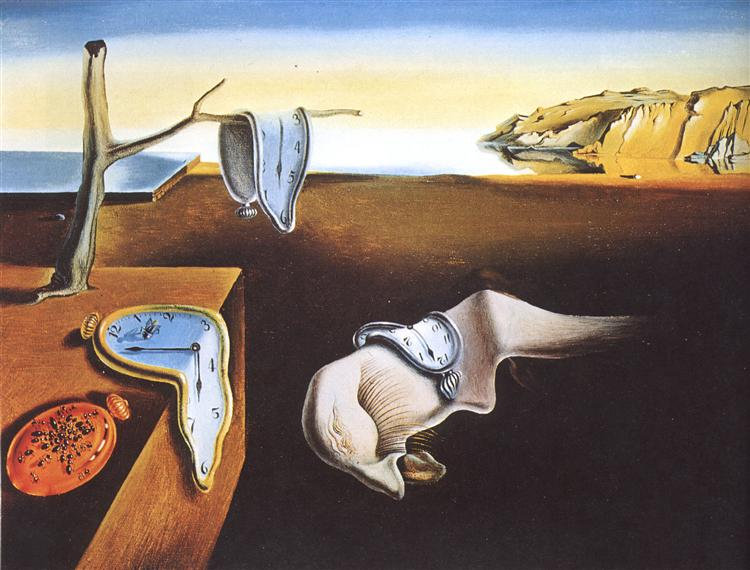
Her hours changed too. Her grandmother’s day was uneven: weaving, then cooking, then a long argument with a neighbour, then weaving again. The granddaughter’s day is cut into shifts and paid by the hour. An hour nobody pays for starts to feel like an hour thrown away. Time is money is time is money ∞ and there goes the soul in this cycle of calculation.
IV. The Age of Net Worth
There’s a phrase for it now. Net worth. It was made for bank accounts, and we use it about people without wincing.
The weaver would have found this the strangest part: nobody makes us do it. We count ourselves, and we never tire of it. Salary. Marks. Followers. Rank. Square feet. A whole life gets boiled down to a figure, and we check the figure every day, the way we check the weather.
For most of us, the figure barely moves. The money from all those sleeves gathers in fewer and fewer hands, and the ladder the boy with a few coins once climbed has lost most of its rungs. Everyone else runs faster just to stay where they are.
Even the winners look alike. Same phones, same suits, same holidays in the same places, the same photographs to prove it. They hand each other business cards that differ by a shade of white, and get mistaken for one another at dinner. Being replaceable was supposed to be the price of being poor. It turned out to be the price of everything.
The weaver’s great-granddaughter works in an office. Software writes her emails, sorts her files, and is learning to do the rest of her job. The factory took the hands. Now the machines are coming for the head. At home, food arrives at the door, her phone remembers her friends’ birthdays, and a map knows the way to her own mother’s house. Is this capitalised convenience derived from your soul’s identity over time?
The factories did feed and clothe millions, and that counts. But a number has no past. It has no character either, only a position, above some people and below others. The weaver was known for how she worked. We’re known for where we stand.
It might be the fairest system anyone has ever come up with. But it degrades the soul. Do not forget that convenience contract has costed us one’s soul, gradually over generations. And yet the divine spark in humans flashes up against being bribed to submit to this degradation by mere convenience or daily comforts, it fights back and that is where we rise above numbers and start being actually counted.
Leave a Reply